
TDSR and MSR Singapore — How Much Can You Actually Borrow?
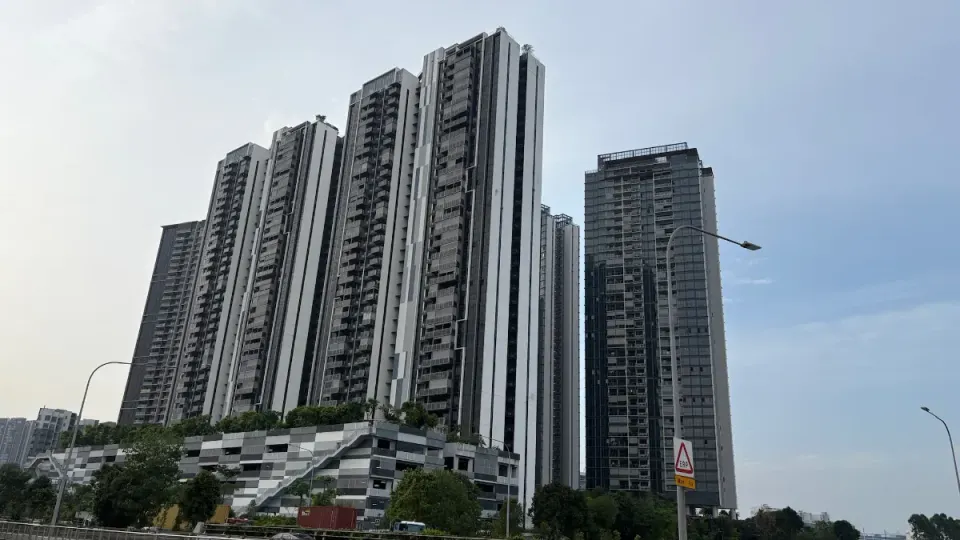
So you've done the real estate viewings, you've fallen in love with a particular unit, and now you're sitting across from your banker wondering why the numbers don't add up. And your sudden realisation is that you really can't afford to buy that dream sea view private property.
Welcome to TDSR and MSR — the two rules that quietly decide how much you can borrow before you've even picked a project. The authoritative source of such information will be the Monetary Authority of Singapore or your "friendly banker" or your helpful real estate agent.
Most buyers only find out about these limits when the bank says no, or when the approved loan comes back lower than expected.
That is not a fun day. Let's fix that.
What Is TDSR?
TDSR stands for Total Debt Servicing Ratio. It caps the total amount of your gross monthly income that can go towards all your debt repayments combined — including the new home loan you're applying for.
The current TDSR limit is 55%.
This means: if you earn $10,000 a month, a maximum of $5,500 can go towards repaying all your debts (home loan, car loan, credit card installments, personal loans — everything that is considered "you need pay or you will be in trouble"... "your stomach can don't eat but your banker must".....).
The formula is simple:
(Total monthly debt obligations ÷ Gross monthly income) × 100% ≤ 55%
TDSR applies to all property loans — private condos, ECs, HDB bought with a bank loan. If you are borrowing from a bank to buy any kind of property, TDSR applies to you.
(Small note: if you take a direct HDB concessionary loan from HDB — not a bank loan — TDSR does not apply. Because our dear HDB is not a bank ma..... But then there is another rule : MSR still does. More on that below.)

What Is MSR?
MSR stands for Mortgage Servicing Ratio. It is a tighter, more specific rule that applies only to your housing loan — not your other debts.
The current MSR limit is 30%.
So if you earn $10,000 a month, only $3,000 can go towards your housing loan repayment.
The formula:
(Monthly housing loan repayment ÷ Gross monthly income) × 100% ≤ 30%
Here is the key thing: MSR only applies when you are buying an HDB flat or an EC (Executive Condominium).
If you are buying a private condo, MSR does not apply. Only TDSR does. So in other ways,
TDSR vs MSR — Side by Side Comparison
| TDSR | MSR | |
|---|---|---|
| Limit | 55% of gross monthly income | 30% of gross monthly income |
| What it covers | ALL debt (home loan + car + credit cards + personal loans) | Housing loan repayment ONLY |
| Applies to | All property loans (private, HDB bank loan, EC) | HDB flats and ECs within MOP only |
| Stress test rate | Higher of 4% or actual "thereafter" rate | 3% |
| Variable income | 70% recognised | 70% recognised |
Which Rule Applies to You?
This depends on what you are buying.
Buying a private condo? Only TDSR applies. Banks will check that your total monthly debt obligations don't exceed 55% of your income.
Buying an HDB flat with a bank loan? Both TDSR and MSR apply. In most cases, MSR is the tighter constraint — because the 30% cap on housing loan repayment is more restrictive than the 55% TDSR cap on total debt.
Buying an HDB flat with an HDB concessionary loan? Only MSR applies. TDSR is not applicable for HDB loans.
Buying an EC? Both TDSR and MSR apply while the EC is within its Minimum Occupation Period. And here's something to note for 2026 — for new EC sites where the land tender closed on or after 8 May 2026, the MOP has been extended from 5 years to 10 years. So MSR applies for a longer period on these newer EC projects.
Wait — Why Does MSR Apply to ECs If You Can't Use an HDB Loan?
Good question, and one that trips up a lot of buyers....... 🤦

You cannot use an HDB concessionary loan to buy an EC — it must be a bank loan. But MSR still applies. Why?
Because MAS specifically extended MSR to cover ECs, even though they are privately built. The reasoning: ECs are a subsidised housing type designed for the "sandwiched class" — they come with income ceilings, CPF housing grants, and eligibility restrictions that private condos don't have. So MAS treats them more like public housing from a borrowing perspective, even though the financing comes from a bank. I know.. I know.. 🤔
The result: for ECs, you get a bank loan AND both TDSR and MSR apply. Two constraints, not one.
The silver lining: once the EC fully privatises — after the MOP and the privatisation period — MSR no longer applies to resale transactions on the open market. At that point, only TDSR governs, just like any private condo. This is one reason why fully privatised ECs are attractive to investors.
The Stress Test — Why Banks Use a Higher Rate
Banks don't calculate your loan affordability using the actual interest rate you'll be paying. They use a higher stress test rate — also called the interest rate floor — to make sure you can still afford repayments if rates go up.
For private property loans: the stress test rate is 4% (or the actual "thereafter" rate if it's higher). For MSR calculations on HDB/EC: the rate is 3%.
This was tightened by MAS in September 2022 as part of the property cooling measures. Before that, the floor was 3.5% for private properties.
What this means practically: the maximum loan amount the bank approves is calculated using 4%, not the actual 3.5% or whatever rate you're offered. So your approved loan will be lower than if they used the real rate. This is by design.

The Variable Income Trap
If part of your income comes from bonuses, commissions, or other variable sources — your bank will not count the full amount.
Only 70% of your variable income is recognised for TDSR and MSR calculations.
Example: Your fixed salary is $6,000/month. You also earn an average of $2,000/month in commissions.
Your recognised income for TDSR/MSR purposes: $6,000 + (70% × $2,000) = $6,000 + $1,400 = $7,400
Not $8,000. This catches a lot of commission-based earners by surprise — salespeople, agents, business owners. If your income is variable, factor this in early.
Yes applies to me 😅, the real estate agent. I am considered variable income..... see, I am so poor thing so please come to me for real estate property purchase or sale business, okay 🙏.....
What Else Eats Into Your Borrowing Power
TDSR counts everything. A lot of buyers forget this.
Your car loan, for example. Say you're paying $1,200/month for your car. That $1,200 is factored into your TDSR. It directly reduces how much you have left for your home loan. And with COE going so high, are you really able to pay $1,200/month for your car loan, meh 😄

Credit card debt counts too. Banks typically count 5% of your outstanding credit card balance as a monthly obligation — not the minimum payment on your statement. Even if you clear your card in full every month, whatever balance is sitting there when the bank pulls your credit bureau report gets counted.
Personal loans, renovation loans, student loans — all in.
The practical move: clear what you can before you apply. Finishing off a small personal loan or reducing your credit card limits before applying for a mortgage can meaningfully increase your maximum home loan.
Buying Together? How IWAA Affects Your Loan
If you are applying for a home loan with a spouse or co-borrower, banks don't just add your incomes together and call it a day. They also use something called the Income Weighted Average Age (IWAA) to determine your maximum loan tenure — and tenure directly affects how much you can borrow.
The formula:
IWAA = (Borrower 1's age × Borrower 1's income + Borrower 2's age × Borrower 2's income) ÷ Total combined income
The bank then calculates your maximum loan tenure from that blended age. For private property, the tenure can go up to 75 minus IWAA (capped at 35 years). For HDB, it's 65 minus IWAA (capped at 30 years).
Why does this matter? Because a longer tenure = lower monthly repayment under the stress test = higher loan approval.
A simple example. Husband is 45, wife is 35. Husband earns $6,000, wife earns $9,000.
IWAA = (45 × $6,000 + 35 × $9,000) ÷ $15,000 = (270,000 + 315,000) ÷ 15,000 = 39 years old
For a private condo: maximum tenure = 75 − 39 = 36 years → capped at 35 years
If the husband applied alone at 45, his maximum tenure would be 75 − 45 = 30 years. The wife's younger age and higher income pulls the blended figure down — stretching the tenure and increasing the couple's maximum loan by a meaningful amount.
The takeaway: when buying as a couple, the younger and higher-earning co-borrower has an outsized positive impact on what you can borrow. Worth factoring in when deciding whose name goes on the loan.
A Worked Example
Let's make this concrete. Say you're an HDB upgrader looking at a new launch private condo.
- Fixed monthly income: $8,000
- Car loan: $900/month
- Credit card: $200/month (minimum payment estimate)
- No other loans
Step 1: Calculate TDSR allowance $8,000 × 55% = $4,400 (maximum total monthly debt)
Step 2: Subtract existing debts $4,400 − $900 − $200 = $3,300
This is the maximum monthly mortgage repayment your bank will approve for you.
Step 3: What loan does $3,300/month get you? Using a stress test rate of 4% over 30 years, $3,300/month translates to approximately $690,000 in loan 😦
If the unit you're eyeing is $1.5m and you need 75% LTV, that's a $1.125m loan — significantly more than what TDSR permits.
You either need more income, fewer existing debts, or a smaller property. That's the reality check TDSR forces.
(Numbers are illustrative — your actual figures will depend on age, tenure, and the bank's assessment. These rules change faster than diapers so please check with your banker or a mortgage broker before making decisions. You have been warned 😄. I know a lot of good bankers so do come to me too....)
History of TDSR and MSR Changes You Should Know
TDSR and MSR have been tightened multiple times over the years.
Here's what's current as of 2026:
December 2021 — MAS reduced the TDSR threshold from 60% to 55%. If you read any older article quoting 60%, it's outdated.
September 2022 — The stress test rate for private property was raised from 3.5% to 4%. This reduced maximum loan sizes across the board.
August 2024 — The LTV limit for HDB concessionary loans was reduced from 80% to 75%. This applies to the HDB loan, not bank loans on private property — but worth knowing if you're buying an HDB or EC first.
May 2026 — EC MOP extended from 5 to 10 years for new EC sites. MSR applies for the full MOP period, so buyers of newer ECs face a longer period where MSR constrains their housing loan.
The Verdict
TDSR and MSR are not your enemies — they're guardrails that stop people from buying more property than they can actually afford. And honestly, given how expensive Singapore property is, that's probably a good thing.
But you need to know these numbers before you start viewings, not after. Because once you've fallen in love with a unit and the bank comes back saying the loan isn't approved? That hurts.
The simple playbook:
- Calculate your recognised income (remember: 70% for variable income)
- Add up all your existing monthly debt obligations
- Work out what's left within the 55% TDSR cap — that's your maximum mortgage repayment
- Use that number to work backwards to a max loan amount, then a max property price
If you're buying an HDB or EC, apply the 30% MSR cap to your housing loan on top of that.
Do this math before you fall in love with a specific project. It makes everything cleaner.
And if the numbers aren't working the way you want — talk to a mortgage broker early, not after you've signed the OTP. Options exist. But only if you have time to use them.
Frequently Asked Questions
What is the current TDSR limit in Singapore? 55% of gross monthly income, as set by MAS in December 2021. This applies to all property loans from banks — private condos, HDB bank loans, and ECs.
What is the current MSR limit in Singapore? 30% of gross monthly income. It applies only to HDB flats and Executive Condominiums within their Minimum Occupation Period. Private condos are not subject to MSR.
Does TDSR apply to HDB concessionary loans? No. If you take a loan directly from HDB (not a bank), TDSR does not apply. But MSR still applies — your housing loan repayment still cannot exceed 30% of your income.
Why does MSR apply to ECs when you can't use an HDB loan? Because MAS specifically extended MSR to cover ECs, even though they are privately built and privately financed. The rationale: ECs come with income ceilings, CPF grants, and eligibility rules that make them more like public housing than private property. So MAS treats them similarly from a borrowing standpoint.
Does MSR apply after an EC is fully privatised? No. Once an EC has fully privatised — after the MOP and privatisation period — MSR no longer applies to resale transactions. Only TDSR governs, just like any private condo.
Do banks count my bonus income in full? No. Only 70% of variable income (bonuses, commissions, freelance earnings) is recognised for TDSR and MSR calculations.
How do banks count credit card debt? Banks count 5% of your outstanding credit card balance as a monthly obligation — not the minimum payment on your statement. If you have a $20,000 balance, that adds $1,000 to your assessed monthly debts. Pay it down before your bank pulls your credit bureau report.
If I apply with my spouse, does the younger person's age help? Yes. Banks use the Income Weighted Average Age (IWAA) to determine the maximum loan tenure. A younger co-borrower with meaningful income lowers the IWAA and extends the tenure — which means a lower monthly repayment under the stress test and a higher approved loan amount.
Disclaimer: The information in this article is based on MAS guidelines as of June 2026 and is for general information only. Rules can and do change. Always verify current figures with your bank, HDB, or a licensed financial advisor before making any property purchase decisions. I am a licensed RES at PropNex and earns commissions on property transactions — Full Disclosure 😄
Keen to know more about new launch condos in Singapore? Check out the upcoming new launch condos in 2026 or drop me a message if you want to talk through your specific situation.

Member discussion